Thursday, February 6, 2014
The best laid schemes o' mice an' men*
Thursday, July 18, 2013
a crazy kind of love
| Amazon Link |
Tuesday, June 4, 2013
May Books Part 2
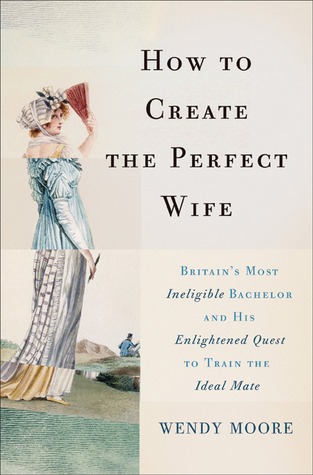
Remember the play, "Pygmalion," which "My Fair Lady" is based on? Well, Pygmalion is actually based on this very true, incredibly weird story and the Greek legend. An eccentric, wealthy Englishman who had little luck with the ladies adopted two orphan girls with the intent of raising them to create the perfect wife in 18th Century England. This book which is very well researched, tells this story of both the bachelor, the orphans, and the friends of both. The story is fascinating and is a fast read. Four Stars.
Walter Kirn is a favorite author of mine and this story does not disappoint. The story, actually an essay, is about the Bible Kirn finds when cleaning out his mother's house shortly after she passes away. He intertwines the notes that he finds in her bible with his own interpretation of scripture passes and the life he shared with his mother. Four Stars.
Like many baseball tales, the actual baseball history of Ron Guidry and Yogi Berra was fascinating. However, I found the author using a lot of filler in this book. The book kind of meandered in one direction and then in another direction with no real rhyme or reason. However, I found the friendship between the two interesting and the reconciliation between Berra and Steinbrenner fascinating. I wasn't a real fan of the author's voice however. Three Stars.
I really can't believe I hadn't read this book before. I believe my parents had a copy of this laying around the house (and I read most of their books at one point or another) but this was the first time I read this classic completely. Much of the book is absolutely fascinating. The stories and Frankl's logic is astonishing. I really wish I would have read this book a few years ago, but I still enjoyed the book a ton now. Four Stars.
Monday, June 3, 2013
May Book Wrap-up Part I
"The White Queen" tells the tale of Elizabeth Woodville, who was the spouse to the King of England in the 15th Century. She's a widow but ends up marrying the King of England. However, although they have quite a few little heirs, the validity of their marriage and the heirs is called into question. Her husband dies quite suddenly, her young boys go missing and another King of England is named. I really thought the first third of the historical fiction read like a poorly written romance novel, but the story picked up once Elizabeth went to London when she was revealed to be the Queen. Three Stars. Book Club Novel.
"The Shoemaker's Wife" is a fictionalized account of the author's grandparents. Her Grandparents hail from villages in the Italian Alps just a few miles from each other. When both are in their early twenties they both move to New York separately. They are reunited in New York and eventually get married. The first two thirds of the book is fascinating. The author is able to create a world that leaves you wanting to turn pages rapidly. However, I thought the last 1/3 was clunky. The author is too close to the characters and the writing is off. Three Stars. Book Club Selection.
"Salvage the Bones" takes place a week before Hurricane Katrina hits Louisiana and Mississippi. The protagonist, a young, pregnant black girl, and her brothers live with their disinterested, alcoholic father in the bayou. The kids pretty much take care of themselves, but the father is interested in Hurricane preparation. I enjoyed this novel a lot except for the heavy handed use of symbolism. 4 Stars.
"Ham on Rye" is a semi-autobiographical novel by the author. The book follows the main character from a three year old to adult life. The story isn't for everyone. There's no love ever shown between anyone and many of the stories told are both humorous and horrific. The novel is written by a (beat) poet and when you read it, you find that there's a rhythm to the novel that is missing in most prose. Five Stars.
"Fever 1793" is not the story of a jaundiced vampire, as that cover would lead you to believe. No, the story is about a teenage girl in Philadelphia during the Yellow Fever plague of that year. The book is based on true events, and really starts moving after a slow 1/3 of the story. I found myself enjoying the novel and the historical details, but only gave this book 3 stars because of the clunky 1/3 of the book.
Thursday, March 21, 2013
Quote of the Day
Margaret Blair Young has been someone I've looked up to for the past couple of years. She's a published author, BYU Professor, President at AML, very involved with the African (and American) Mormon Community.
Thursday, June 28, 2012
#42-How to Hepburn*
*The Title to this blog isn't a reference to the Hitchhiker's Guide to the Galaxy. No, I'm going to attempt to write a paragraph or two about each book I've read so far this year. Yes, this was my 42nd book this year. Trust me, I'm not bragging about that. I hope this project doesn't bore my 5 readers to death. I really hope I'm able to complete it.
Saturday, November 20, 2010
The Hunger Games Trilogy as a Venn Diagram

Sunday, May 9, 2010
Thursday, February 25, 2010
A Picture Book Report
So, guess the book! I admit, I stared at this a second before a smile came to my face recalling the source material.A Picture Book Report
Here's another one from the same blog that is a quietly beautiful illustration from a classic American novel. If you're not sure, check out the little dream as illustrated by his reflection.
Original Post

Thursday, November 12, 2009
Books I've Read in 2009: Part 1
"Blood Meridian: Or the Evening Redness in the West," by Cormac McCarthy
Out of Cormac McCarthy's books (even The Road), this book is often called his masterpiece, and perhaps the most difficult to read. One of Cormac McCarthy's themes is kindness juxtaposed with violence, but this book takes it up a notch. One reviewer admitted that McCarthy is a genius, but wondered if McCarthy was mentally sane after reading this book. And after reading it, it's a valid thought. Blood Meridian is a Western, and tells the story of a 14 year old boy thrown into a gang of scalpers on the Mexican Border. His main antagonist is Judge Holden, a 7' tall man who is a murderer, child molestor, and..you get the idea. The story follows the two main characters through a period of several decades-juxtaposing pure evil with humanity.
I can't say I'd recommend this to anyone, in fact I'd tell anyone to be sure they can handle violence.
I enjoyed this book. The author is a cousin of my mom's, and he writes pretty well.
I like Vowell, definitely better than Sedaris and maybe almost as well as Klosterman. This book has some great essays, but is dated.
Angus, Thongs and Full-Frontal Snogging: Confessions of Georgia Nicolson (Confessions of Georgia Nicolson Book 1)by Louise Rennison
Bridget Jones ruined chick-lit (and I liked Bridget Jones). That being said, it was actually a pretty cute lil' book. I just couldn't get into this story.
Sunday, August 2, 2009
Pulitzer Prize Winners: An Update
Pulitzer Prize Winners for Fiction by Year
2009 Olive Kitteridge by Elizabeth Strout
2008 The Brief Wonderous World of Oscar Wao by Junot Diaz
2007 The Road by Cormac McCarthy
2006 March by Geraldine Brooks
2005 Gilead by Marilynne Robinson
2004 The Known World by Edward P. Jones
2003 Middlesex by Jeffrey Eugenides
2002 Empire Falls by Richard Russo
2001 The Amazing Adventures of Kavalier & Clay by Michael Chabon
2000 Interpreter of Maladies by Jhumpa Lahiri
1999 The Hours by Michael Cunningham
1998 American Pastoral by Philip Roth
1997 Martin Dressler: The Tale of an American Dreamer by Steven Millhauser
1996 Independence Day by Richard Ford
1995 The Stone Diaries by Carol Shields
1994 The Shipping News by E. Annie Proulx
1993 A Good Scent From a Strange Mountain by Robert Olen Butler
1992 A Thousand Acres by Jane Smiley*
1991 Rabbit At Rest by John Updike
1990 The Mambo Kings Play Songs of Love by Oscar Hijuelos
1989 Breathing Lessons by Anne Tyler
1988 Beloved by Toni Morrison
1987 A Summons To Memphis by Peter Taylor
1986 Lonesome Dove by Larry Mcmurtry
1985 Foreign Affairs by Alison Lurie
1984 Ironweed by William Kennedy
1983 The Color Purple by Alice Walker
1982 Rabbit Is Rich by John Updike
1981 A Confederacy of Dunces by John Kennedy Toole
1980 The Executioner's Song by Norman Mailer
1979 The Stories of John Cheever by John Cheever
1978 Elbow Room: Stories by James Alan Mcpherson
1977 No award was given.
1976 Humboldt's Gift by Saul Bellow
1975 The Killer Angels by Michael Shaara
1974 No award was given.
1973 The Optimist's Daughter (large Print) by Eudora Welty
1972 Angle of Repose by Wallace Earle Stegner
1971 No award was given.
1970 The Collected Stories of Jean Stafford by Jean Stafford
1969 House Made of Dawn by N Scott Momaday
1968 The Confessions of Nat Turner by William Styron
1967 The Fixer by Bernard Malamud
1966 The Collected Stories of Katherine Anne Porter by Katherine Anne Porter
1965 The Keepers of the House by Shirley Ann Grau
1964 No award was given.
1963 The Reivers: A Reminiscence by William Faulkner
1962 The Edge of Sadness by Edwin O'Connor
1961 To Kill a Mockingbird by Harper Lee
1960 Advise and Consent by Allen Drury
1959 The Travels of Jaimie Mcpheeters by Robert Lewis Taylor
1958 A Death in the Family by James Agee
1957 No award was given.
1956 Andersonville by Mackinlay Kantor
1955 A Fable by William Faulkner
1954 No award was given.
1953 The Old Man and the Sea by Ernest Hemingway
1952 The Caine Mutiny: A Novel of World War II by Herman Wouk
1951 The Town by Conrad Richter
1950 The Way West by A B Guthrie
1949 Guard of Honor by James Gould Cozzens
1948 Tales of the South Pacific by James A. Michener
1947 All the King's Men by Robert Penn Warren
1946 No award was given.
1945 A Bell for Adano by John Hersey
1944 Journey in the Dark by Martin Flavin
1943 Dragon's Teeth I by Upton Sinclair
1942 In This Our Life by Ellen Glasgow
1941 No award was given.
1940 The Grapes of Wrath by John Steinbeck
1939 The Yearling by Marjorie Kinnan Rawlings
1938 The Late George Apley by John Phillips Marquand
1937 Gone With the Wind by Margaret Mitchell
1936 Honey in the Horn by Harold Lenoir Davis
1935 Now in November by Josephine W. Johnson
1934 Lamb in His Bosom by Caroline Miller
1933 The Store by Thomas Stribling
1932 The Good Earth by Pearl S. Buck
1931 Years of Grace by Margaret Ayer Barnes
1930 Laughing Boy by Oliver Lafarge
1929 Scarlet Sister Mary by Julia Peterkin
1928 The Bridge of San Luis Rey by Thornton Wilder
1927 Early Autumn by Louis Bromfield
1926 Arrowsmith by Sinclair Lewis
1925 So Big by Edna Ferber
1924 The Able Mclaughlins by Margaret Wilson
1923 One of Ours by Willa Silbert Cather
1922 Alice Adams by Booth Tarkington
1921 The Age of Innocence by Edith Wharton
1920 No award was given.
1919 The Magnificent Ambersons by Booth Tarkington
1918 His Family by Ernest Poole
*I'd highly recommend any of these to most people except for a Thousand Acres, which I hated. But in fairness, I read that book 13 or so years ago. Many of these are treasured reads.
Thursday, July 9, 2009
Best Book Blurb ever
Angel Falling Softly by Eugene Woodbury
Wednesday, June 17, 2009
Jerry Johnston's Op-Ed on the "Great Mormon Novel"
On Friday, my mom shared with me an op-ed by Jerry Johnston. Mr. Johnston declared that the "Great Mormon Novel" written by an active latter day saint is a pipe dream and will never exist. Now, he's right on one point, the "Great Mormon Novel" has never been written before. In the fiction category, I can't think of any novel that comes close to being the "Great Mormon Novel." Now, the term, the "Great Mormon Novel" is obviously a variation of "The Great American Novel which according to Wiki is :
The "Great American Novel" is the concept of a novel that most perfectly represents the spirit of life in the United States at the time of its writing. It is presumed to be written by an American author who is knowledgeable about the state, culture, and perspective of the common American citizen.
So, by simply simply substituting "Mormon" for American, you get a pretty adequate definition of the "Great Mormon Novel" and one that is align with the definition that Mr. Johnston is using in his op-ed piece.
Mr. Johnston contends that the "Great Mormon Novel will never exist because:
- Great Novels Need Doubt as a vantage point
- Devout LDS writers don't have a lot of areas of gray to explore.
- Mormonism requires devout members a complete surrender of one's ego, ideas and ambitions.
- A devout Mormon will want to promote the Mormon Faith.
- "Devout Mormons don't have the luxury of Great Catholic writers (O'Connor and Greene). Catholic writers could stay in the "bosom of the church" and still could give us all kinds of flawed and distorted character. They could write graphically about sin, reel off heretical theological speculations and even lampoon Catholic authority figures."
- An authentic literary masterpiece would make Mormons feel uncomfortable, exposed and betrayed
Because of the points above, he then goes on to say that a grand and glorious literary novel heralded by both the LDS faithful and the literary world could never exist.
I agree with him that great literary masterpieces use doubt as their "vantage" point. Doubt in the LDS church isn't exactly encouraged. In fact, I'm honestly thinking about how I would describe the role of doubt in the LDS church and in my own experience as a Latter Day Saint. That being said, there are so many gray areas in the LDS church that can be explored.
I personally rarely see the world in black and white, and often Mormonism to me is no different. There's gray areas all over the place in the church. Yes, I have a strong testimony of the gospel, but there's many gray areas in the church that are ripe for exploration in a literary context. There's history, some doctrine, and then there's this-we don't have a perfect understanding of God's plan for us. If we don't have a perfect understanding, there's room for doubt-and because we are not perfect, there will be gray areas because we don't have perfect knowlege. Granted, I've had quite a few friends who explored the gray areas so much that they ultimately left the church.
I understand why most LDS fiction writers portray the church in a favorable light and want to promote the church. However, there's a voice in my head that wonders what if someone were to portray the religious culture, the warts and the glorious parts of itl. What if a fiction writer were to lay bare how they see the church in a novel? Mr. Johnson alludes in his essay that the writer would be ostracized by the church. I'm not sure if that's true. But then at this point, both Mr. Johnson and myself are purely speculating.
I almost see Mr. Johnston challenging a generation of aspiring and published LDS writers. He says it can never be done, but I'm sure there's more than one person out there saying, "it can never be done? I'll show you."
Update: Today I found a quote in "By Common Consent" that resonated with me and relates back to this op-ed,
"The restraints that Mormonism places on our behavior and our comportment should be viewed as the rhyme scheme in a sonnet or the censors in Iran. The pain is in using the limits to force yourself to look inward and work harder with the available material. If we accept the limits, and the necessity of the limits, that should inspire us to find ways to transcend them. So much Mormon literature is about the maintenance of the limits; so little seems to find the value that comes from the struggle with them (that’s what they are there for, after all)."
Jerry Johnston's Op-Ed
Great novels need doubt as vantage
By Jerry JohnstonThere are perks with this job -- perks like the chance to spend quality time with quality people.
And a perk I'll always cherish is the afternoon I spent with Wallace Stegner talking about Montana, Mormons and modern writing.
Stegner was the guru of all things Western. And he understood Mormons about as well as someone not of the faith can. Yet even then, he missed things. He told me that in his novel "Recapitulation," he had a chaste, young Mormon couple getting married in the backyard of a friend. Someone had to point out to him that chaste, young Mormon couples get married in the LDS temple.
He didn't know.
And he didn't know when "The Great Mormon Novel" would show up. He said he'd been reading Levi Peterson's "The Backslider," but didn't think that was it. Then he said, "Maybe you'll write it."
He was joking, of course.
"I don't have the scope or range to do it," I said.
"You don't have to make it large," he said. "Just get things right."
He said he thought the "Great Mormon Novel" would eventually be penned by someone who was born in the church, left the church, then made it "part way" back again. He seemed to think that would be a perfect vantage point. Being away from the church would give the writer perspective, while coming part way back would guarantee his empathy for the culture.
Since that day with Stegner, I've thought often about LDS novels. And I've reached the conclusion that Stegner hadn't found the Great Mormon Novel because ... there can never be one.
I have known some marvelous Mormon wordsmiths. But being a Mormon is not like being Catholic or Jewish. There is precious little wiggle room for devout LDS writers. There aren't a lot of gray areas to explore.
The Mormon religion demands a lot of people. At its core, Mormonism demands all of one's talents to the furthering of the Kingdom of God. That means a complete surrender of one's ego, ideas and ambitions.
A true LDS writer would not want to be on the outside looking in. He wouldn't want to be defiant.
He'd want to promote the faith.
Great Catholic writers, like Flannery O'Connor and Graham Greene, could follow their muse and stay in the Catholic fold. They could give us all kinds of flawed and distorted character. They could write graphically about sin, reel off heretical theological speculations and even lampoon Catholic authority figures, yet remain in the bosom of their church.
Mormons -- card-carrying temple Mormons -- can never have that luxury.
In the future, I'm sure LDS writers will produce wonderful novels.
But a grand and glorious literary novel that is heralded by both the LDS faithful and the literary world?
I don't think so.
Without the blessing of the church, it would never really be a Mormon novel -- anymore than "Angels in America" is a Mormon play.
The Great Mormon Novel is a dream held by literary types in the church.
It is also the Great White Whale pursued by devout Mormons who can't understand -- in this day and age -- just how uncomfortable, exposed and betrayed an authentic literary masterpiece would make them feel.
MormonTimes.com is produced by the Deseret News in Salt Lake City, Utah.
It is not an official publication of The Church of Jesus Christ of Latter-day Saints.
Copyright © 2009 Deseret News Publishing Company
A couple of other blogs about Jerry Johnston's article:
William Morris and S.P. Bailey at A Motley Vision makes some interesting points, most I don't agree with-but his piece is thought-provoking.
Dallas has a fun piece about this essay
Kent Larson at Times and Season has a thought provoking piece on the article.
Tuesday, March 31, 2009
Pride and Prejudice and Zombies: An Excerpt
by Seth Grahame-Smith
As Mr. Darcy walked off, Elizabeth felt her blood turn cold. She had never in her life been so insulted. The warrior code demanded she avenge her honour. Elizabeth reached down to her ankle, taking care not to draw attention. There, her hand met the dagger concealed beneath her dress. She meant to follow this proud Mr. Darcy outside and open his throat.But no sooner had she grabbed the handle of her weapon than a chorus of screams filled the assembly hall, immediately joined by the shattering of window panes. Unmentionables poured in, their movements clumsy yet swift; their burial clothing in a range of untidiness. Some wore gowns so tattered as to render them scandalous; other wore suits so filthy that one would assume they were assembled from little more than dirt and dried blood. Their flesh was in varying degrees of putrefaction; the freshly stricken were slightly green and pliant, whereas the longer dead were grey and brittle – their eyes and tongues long since turned to dust, and their lips pulled back into everlasting skeletal smiles.
A few of the guests, who had the misfortune of being too near the windows, were seized and feasted on at once. When Elizabeth stood, she saw Mrs. Long struggle to free herself as two female dreadfuls bit into her head, cracking her skull like a walnut, and sending a shower of dark blood spouting as high as the chandeliers.
Wednesday, February 25, 2009
Rough Stone Rolling
As for the book, I enjoyed it. Here's what I said about it on goodreads.
Comprehensive thorough biography of Joseph Smith and touches upon the basic
tenets of Mormonism. I appreciated how the book put doctrine J.Smith taught into
a context I hadn't thought of before. I also liked the way the author laid out
the life story of J.Smith. Fascinating book-doesn't gloss over the controversial
parts of J.Smith's life, but is somewhat sympathetic. In my opinion, it's
impossible to be completely objective when talking about J.Smith.